Are We Not Equal Before Allah? By Ameen Olorunnimbe
A foundational tenet of Islamic theology is the absolute equality of all human beings before Allah. No…
- Introduction: The Islamic Principle of Universal Equality
A foundational tenet of Islamic theology is the absolute equality of all human beings before Allah. No person is inherently superior to another by virtue of wealth, status, race, nationality, or title; distinction exists solely through righteousness (taqwa). This principle is rooted in the Qur’an, reinforced by the Sunnah, and manifested visibly in the daily practices of Muslim communities worldwide. Allah is described by the divine names al-Malik (The Sovereign), al-‘Azeez (The Almighty), al-Hakeem (The All-Wise), al-Ghani (The Self-Sufficient), and al-Mughni (The Bestower of Sufficiency)—attributes confirming that all creation stands equally subject to His authority.
The definitive scriptural foundation is:
“O mankind, indeed We have created you from male and female and made you peoples and tribes that you may know one another. Indeed, the most noble of you in the sight of Allah is the most righteous of you. Indeed, Allah is Knowing and Acquainted.”
— Qur’an, Surah al-Hujurat 49:13
From this verse emerges a clear framework: diversity is intentional, and hierarchy is not a function of birth or rank.
- Scriptural and Prophetic Foundations of Equality
The Qur’an further affirms shared human dignity:
“And We have certainly honored the children of Adam…” — Qur’an, Surah al-Isra 17:70
The Prophet Muhammad ﷺ reinforced this in his Farewell Sermon (*Khutbat al-Widaa’):
“O people, verily your Lord is One and your father is one. Behold, there is no superiority of the Arab over the non-Arab, or of the non-Arab over the Arab, nor of the white over the black, nor of the black over the white—except by piety.”
— Musnad Ahmad 23536; Jami’ al-Tirmidhi 3277
He also taught:
“Indeed, Allah does not look at your appearance or wealth, but rather He looks at your hearts and deeds.”
— Sahih Muslim
This triad—Qur’anic verse, Farewell Sermon, and authentic hadith—establishes equality not as an abstraction but as a divinely ordained norm.
- Equality Embodied: Worship as Living Proof
The equality described in scripture is lived visibly in Muslim worship. Unlike systems of courtly reverence, Muslims do not bow before any earthly ruler; prostration is reserved exclusively for Allah.
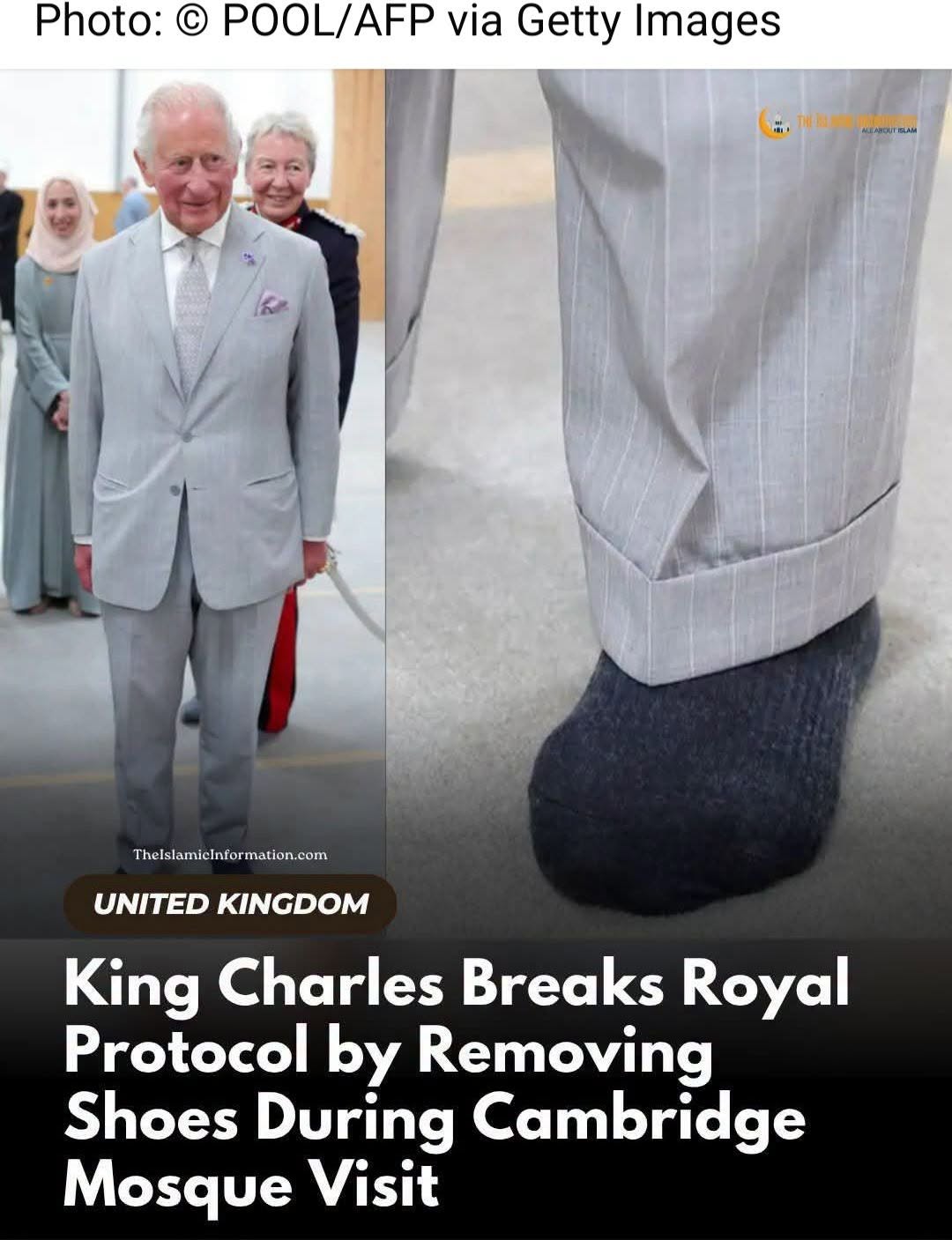
A powerful contemporary illustration occurred on 20 July 2026, when King Charles III visited Cambridge Central Mosque—Europe’s first eco-mosque. On the same day he accepted Prime Minister Keir Starmer’s resignation and invited Andy Burnham to form a new administration, the King entered the prayer hall and removed his shoes, complying with the universal rule regardless of royal office. He joked with schoolchildren and praised the building’s design, yet protocol did not create an exception: the standard of cleanliness and humility applied to him as to every other visitor .
This practice mirrors the mosque’s timeless function: in congregational prayer (salah), rows are formed shoulder-to-shoulder, heel-to-heel, with no reserved places. The Prophet ﷺ declared that in these lines, “the king stands beside the servant, the wealthy beside the poor”. In Nigeria, this is routinely observable: a figure of immense wealth such as Aliko Dangote, who maintains consistent prayer practice despite his global standing, or a traditional ruler like Amir of Kano, Sanusi II, may stand on the same mat alongside the poorest villager. Status dissolves; the ritual enacts the theology.
The Hajj pilgrimage extends this further: millions wear identical seamless white garments (ihram), erasing class and nationality—mirroring the shroud in which all will be buried.
- Equality in Life, Respect, and Death
The mosque etiquette reflects a broader ethical obligation: respect for the religion, culture, and traditions of others is incumbent upon all, irrespective of rank. Rules of conduct—such as removing footwear to preserve cleanliness—are applied universally, without selectivity.
Ultimately, equality is sealed by mortality. The same dignitaries surrounded by protocol share the same end. In death, all worldly distinction is stripped away: rich and poor, ruler and subject, are buried in the same manner, returning to the earth. No title, office, or fortune alters this fate—a sober confirmation that before Allah and before creation’s cycle, all are equal.
- Conclusion
The Islamic worldview dismantles hierarchies built on race, wealth, and power, replacing them with a single criterion: righteousness. From the Qur’anic declaration of shared origins (49:13), through the Farewell Sermon’s rejection of racial/class supremacy, to the visible uniformity of the prayer hall and the great equaliser of death—the message is consistent. Compliance with shared norms—such as removing footwear in a mosque—acts as a quiet but powerful reminder. Respect for this principle fosters interfaith harmony and social equity across diverse societies.
Author: Ameen Olorunnimbe BA Hons, LLM (UK), LCIA, Ciarb22nd of July 2026.
References
- The Qur’an. Surah al-Hujurat 49:13; Surah al-Isra 17:70.
- Sahih Muslim, Kitab al-Birr, hadith: “Allah does not look at your appearance…”
- Musnad Ahmad ibn Hanbal, No. 23536; Jami’ al-Tirmidhi, No. 3277 — Farewell Sermon narration.
- Russell, S. (2026). King Charles hails ‘Europe’s first eco mosque’ during Cambridge visit. Reuters/Yahoo News, 20 July.
- Anadolu Agency (2026). King Charles visits Cambridge Central Mosque. Türkiye Today, 21 July.
- AccessQuran (2025). Salah: A True Demonstration of Equality in Islam.
- WhyIslam (2025). Diversity in Islam: Equality in Rituals.
- Punch Newspapers (2026). EID: Inside the spiritual lives of Nigeria’s billionaires — Dangote profile.
- Islamic Brains (2026). Islamic Teachings on Equality.
Tags: Islam, Equality, Human Dignity, Qur’an, Hadith, King Charles III, Cambridge Central Mosque, Aliko Dangote, Sanusi II, Religious Practice, Interfaith, Global Ethics, Nigeria, United Kingdom