
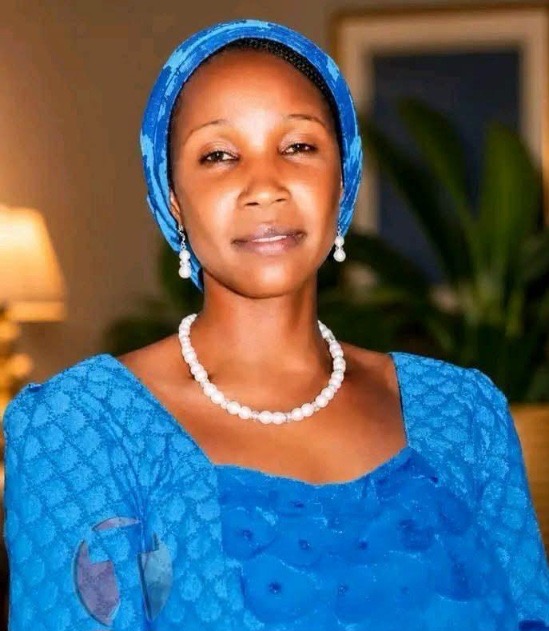
The Case of Lami Samuel Dawa and 13-year-old Aisha Kabir Saleh
There is something particularly troubling about the way some media organisations report stories involving Islam, Muslims and…
There is something particularly troubling about the way some media organisations report stories involving Islam, Muslims and religious minorities. Sometimes, the distortion does not necessarily happen through the invention of an entirely fictitious event. It happens through selective presentation, omission of material facts, misleading headlines and the deliberate framing of an incident in a way that invites readers to reach a predetermined conclusion.
The case of Lami Samuel Dawa is a particularly instructive example.
When news of her 14-year prison sentence first emerged, several media platforms presented the story as that of a Christian woman who had been imprisoned in Borno State for converting a Muslim woman to Christianity.
The narrative was straightforward: a Christian woman shared her faith, a Muslim woman voluntarily embraced Christianity, and an Islamic society punished the Christian woman for exercising her religious freedom.
It was an emotionally compelling story. It was also a story that quickly became ammunition for those looking to portray Islam and Muslims as intolerant of other religions.
Consider the report published by International Christian Concern/Persecution.org on October 21, 2026. Its headline was: Christian Mother Sentenced to 14 Years in Prison in Nigeria.
The framing presented the case as one involving a Christian mother punished for religious conversion. Other platforms went further, explicitly describing the person who converted as an adult Muslim woman who had voluntarily embraced Christianity.
The Barnabas Aid report of October 30 was particularly categorical. Its headline read: Nigerian Christian Woman Sentenced to 14 Years for Sharing Her Faith. It described the alleged convert as an adult woman in her late thirties who had freely chosen Christianity.
But there was a problem with this narrative: the person at the centre of the conversion was not a woman in her late thirties. She was a minor.
When the details of the court proceedings began to emerge, a very different picture became apparent.
According to the certified judgment obtained and reported by Muslim News Nigeria, the person at the centre of the case was a 16-year-old girl, Aisha Kabir Saleh, who testified that she had converted to Christianity at the age of 13.
Read that again. Thirteen!
This was not a case of an adult woman exercising her constitutional right to change her religion. It concerned a child whose movement from her parents’ custody, education and religious upbringing became the subject of criminal proceedings.
What did the court proceedings reveal?
The girl’s testimony, as reported from the certified judgment, described how she became acquainted with a teacher who bought her gifts and subsequently introduced her to people who facilitated her movement to Christian institutions in Jos. She was eventually enrolled in a Bible school for new converts.
After returning to Maiduguri, she testified that she was encouraged to leave home again. She alleged that Lami Samuel Dawa told her that her parents intended to kill her because of her conversion. She further alleged that Dawa collected money intended for her examinations, provided her with a telephone and SIM card, arranged her journey to Jos and gave her money for the trip.
The testimony also described how she was instructed to stop in Bauchi when the search for her intensified.
These are not details one would ordinarily associate with a simple conversation between two consenting adults about religion.
The prosecution brought charges relating to conspiracy to abduct a child, enticing a minor away from parental custody, removal from lawful custody, deprivation of education and interference with the child’s religious practice and conversion.
Lami Samuel Dawa was convicted under Section 210 of the Borno State Penal Code Law 2023, concerning deprivation of a parent of lawful custody of a child, and sentenced to 14 years’ imprisonment. The four other defendants were discharged and acquitted.
Saturday PUNCH reported the clarification from the Christian Lawyers Fellowship of Nigeria and the Pentecostal Fellowship of Nigeria. Interestingly, even Christian legal representatives who represented the defendants cautioned against reducing the case to a story about someone being imprisoned simply for preaching Christianity.
There is another detail worth establishing. This was a Borno State High Court case, not a Sharia Court proceeding. The judgment was delivered by the Borno State High Court in Maiduguri under the state’s Penal Code and Child Protection Law.
Yet, by the time the fuller details began circulating, the initial narrative had already travelled.
This is how misinformation works. It does not always need to invent an incident. Sometimes, it only needs to remove the facts that would change how people understand it.
Consider the implications of the original reporting.
Imagine reading that a Christian woman had been sentenced to 14 years in prison for helping an adult Muslim woman convert to Christianity. What conclusion would you naturally draw? That Muslims are persecuting Christians for sharing their faith. That Christianity is being criminalised. That a woman has been punished for another adult’s religious choice.
Now imagine reading that a 16-year-old girl was allegedly taken away from her parents, moved across states, withdrawn from her educational environment and placed in a religious institution without her parents’ knowledge or consent.
Would you still describe the case in the same way?
The facts matter. They change the entire context of the story.
I am particularly interested in how quickly a criminal case can be transformed into an indictment of an entire religion. An alleged offence involving an individual becomes evidence of what Islam supposedly represents. A court judgment becomes an example of religious persecution before the underlying proceedings have even been examined.
And this is not harmless journalism. Nigeria is a country with a complicated history of religious tensions. Reporting that misrepresents events involving Muslims and Christians can deepen suspicion, reinforce existing prejudices and potentially endanger people.
There is also something instructive about the response of the Christian Association of Nigeria. In its October 31 statement, CAN said it was concerned about reports involving the conversion of an adult woman, while acknowledging that the precise facts and legal basis of the conviction were still being verified.
That acknowledgement should have been the starting point for responsible reporting, not an afterthought.
Nobody is suggesting that a court judgment must be accepted without scrutiny. Lami Samuel Dawa has the right to appeal, and the appellate process should be allowed to examine the evidence, the application of the law and the proportionality of the sentence. Religious freedom is a constitutional right, and no one should be punished simply for sharing their faith or for another adult’s voluntary religious decision.
But the freedom to practise and propagate religion does not confer the right to remove a child from lawful parental custody. These are two entirely different questions, and responsible journalism should not deliberately blur them.
If there are legitimate questions about the judgment, let us examine them. If the sentence is excessive, let the appeal address it. If the court misapplied the law, let the appropriate legal arguments be made. But why manufacture a different account of the events to make the case more emotionally appealing?
The broader lesson here extends beyond Lami Samuel Dawa.
Whenever a story involving Islam breaks, particularly one that appears to confirm an existing negative perception, we must resist the temptation to accept the first headline we encounter. Read the court documents where available. Examine the evidence. Establish the identity and age of the people involved. Distinguish allegations from findings and headlines from actual judgments.
The same standard must apply when Muslims are accused of wrongdoing. We cannot demand fair reporting when the story concerns us and abandon that standard when the facts are inconvenient.
Islam does not need fabricated defences, just as Christianity does not deserve fabricated accusations. The truth should be sufficient.
The case of Lami Samuel Dawa should remind us that sometimes the most consequential part of a story is not what the media tells you, but what it leaves out.
A headline can travel around the world in minutes. The truth may take considerably longer to catch up.


