
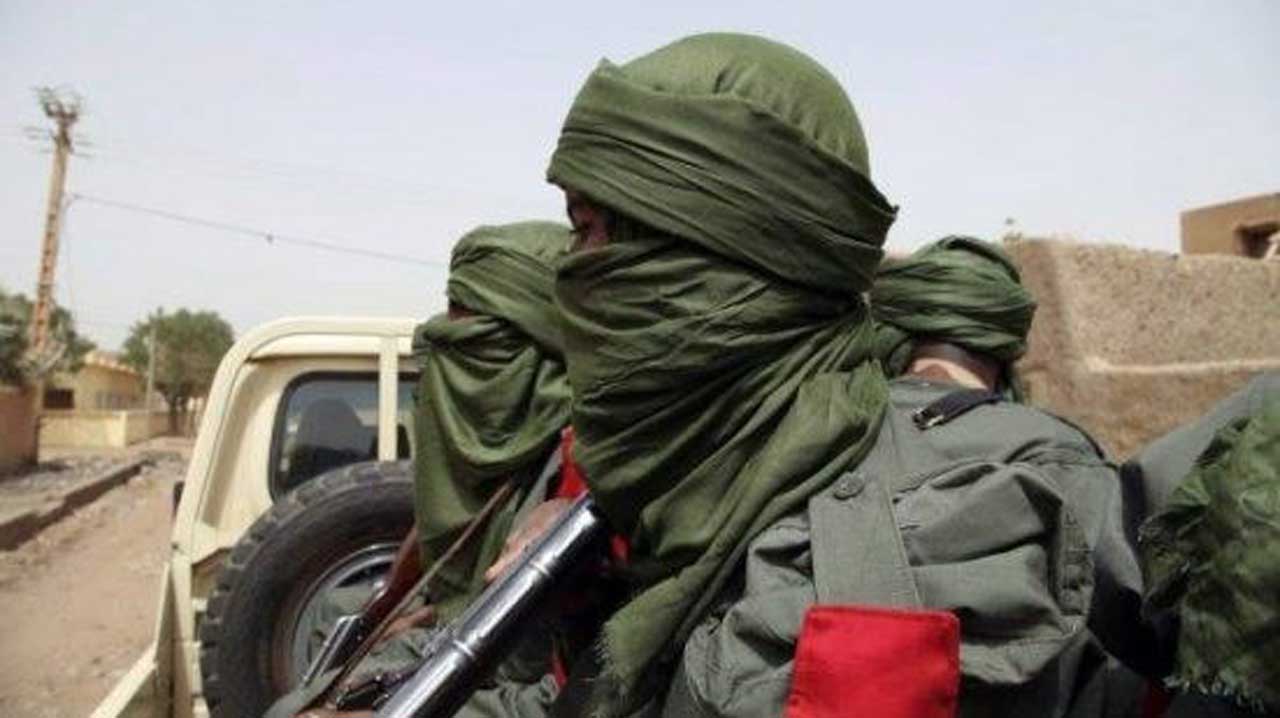
The Lie That Refuses to Die: A Refutation of Islam’s Alleged Link to Banditry By Abdullah Bello
Introduction Insecurity plagues us. It always has. And now it has heightened to a near uncontainable extent…
Introduction
Insecurity plagues us. It always has. And now it has heightened to a near uncontainable extent in recent times. Muslims and non-Muslims alike suffer the brunt of it — Muslims, perhaps, even more so. And yet, with all of this shared misery, it is still alleged that it is the Muslims who are perpetrating it. That Islam is somehow responsible for this insecurity. That the bandits who terrorize our lands are acting in accordance with Islamic teachings. An ever-befuddling allegation.
One might, albeit with great generosity, understand why such a claim would appeal to those unfamiliar with the religion. After all, many of these monsters utter certain Arabic words. They bear Arabic names. Some pray in the way Muslims pray. There are reports that some even try to go on pilgrimage to what Muslims consider the holy land. They invoke the name of God before acts of terror. And perhaps, to those who do not know any better, this is enough to ascertain their Muslimness.
Granted. But we — scholars and laymen alike — have distanced ourselves from them over and over again. We have disavowed their monstrosities. We have said clearly, in the loudest possible manner, that Islam does not permit any of this. Sermons, lectures, articles, and public statements have made it abundantly clear that Islam neither sanctions nor celebrates their actions. We have shown disgust. Our own people have suffered at their hands. Our own have lost their lives, wealth, and dignity and we stand to lose more, perhaps to a greater extent than most. And yet, no matter how loudly we speak, the accusation persists.
It is generally accepted that when an overwhelming majority of people affirm one thing and a tiny minority does another, the minority is treated as the exception rather than the rule. Why then is that common sense abandoned when the discussion turns to Muslims? The bandit is taken as the true measure of Islam, while the millions who reject him are paid no heed.
And so we have been pushed to a wall. It feels as though we are speaking into the void, to a crowd that neither hears nor sees. That our continual clarifications do nothing but yield the same result.
The repetition of the lie has become so relentless that doubts have begun seeping into the minds of some Muslims. The barrage of falsehood is simply too overwhelming for a person of modest Islamic grounding to withstand alone.
For this reason, the need for addressing these claims remains ever necessary. Perhaps not for those who have already made up their minds. It is perhaps best to accept that the willfully blind will not see no matter how much you point. But for the Muslim whose faith is beginning to waver. For the sincere non-Muslim who genuinely wants to know what Islam teaches. We owe them both an answer.
Many attempts have been made at clarification. This piece is a contribution to that effort. Therefore, this piece will proceed in three parts.
First, we shall examine the Islamic ruling on banditry itself and the severe punishments prescribed for it under the Sharia.
Second, we shall address the claim that banditry constitutes a form of jihad and demonstrate that such a notion is entirely incompatible with the Islamic understanding of warfare.
Third, we shall examine the growing call for reconciliation with these bandits and assess the logic behind it.
Part One: The Islamic Ruling on Banditry
Perhaps the most ironic aspect of the accusation against Islam is that the religion being blamed for banditry is the very religion that classifies banditry among the gravest crimes a human being can commit.
Under the Sharia, banditry falls under what the jurists call hiraabah. Hiraabah means ambushing people and threatening them with weapons in the deserts or in the cities, killing them, terrorizing them, and seizing their property by force and openly. The ruling also applies to those who terrorize others for the purposes of rape or sexual assault, thereby creating widespread fear and insecurity in the society.
One cannot help but notice how accurately this description fits the bandits that plague us.
Their conduct is not merely criminal in the ordinary sense. It constitutes a direct assault upon public safety itself. And it is for this reason that Allah reserved for such criminals one of the most severe punishments found anywhere in the Quran.
Allah says:
“Indeed, the penalty for those who wage war against Allah and His Messenger and strive upon the earth spreading corruption is that they be killed, or crucified, or have their hands and feet cut off on opposite sides, or be exiled from the land. That is for them a disgrace in this world, and for them in the Hereafter is a great punishment.” (Al-Ma’idah: 33)
Classical and contemporary jurists alike interpreted this verse as directly addressing bandits and those who spread terror in the land. The punishments prescribed vary in severity according to the nature of the crimes committed, and in the most extreme cases, all may be applied together. That is what Islam prescribes for those who spread mischief upon the earth and make life unbearable for its people.
The accusation therefore presents a contradiction that its proponents have yet to resolve. How does a religion that prescribes some of the harshest punishments imaginable for banditry simultaneously encourage it? Until this contradiction is reconciled, the claim that Islam promotes banditry has no ground to stand on.
Furthermore, the Messenger of Allah ﷺ stated that Allah Himself will be the direct opponent on the Day of Judgement of three categories of people, among them:
“A man who sells a free person and consumes his price.”
If selling a free person is a crime so grave that Allah promises to personally oppose the perpetrator on the Day of Resurrection, then what should be said of those who kidnap free human beings, transport them through forests, torture them, starve them, and demand millions from their families for their return?
To abduct a person and ransom their life is, in essence, to sell a free person. The Islamic position could not be clearer.
These men are not carrying out the commands of Allah. They are not implementing the Sharia. They stand in direct opposition to Islamic teaching and fall squarely within the category of those who spread corruption upon the earth and these will suffer a painful punishment in the Hereafter.
Allah says:
“And when he goes away, he strives throughout the land to cause corruption therein and destroy crops and animals. And Allah does not like corruption.” (2:205)
And He says:
“And cause not corruption upon the earth after its reformation.” (7:56)
The Arabic word used in these verses is fasad, and I do not think there is any more fitting description of what these bandits have done to our communities. They have destroyed crops. They have killed and rustled livestock. They have burned villages. They have taken children from their mothers. They have displaced entire communities from land their families have farmed for generations. This is fasad. And Allah does not merely forbid corruption and mischief; He says explicitly that He does not like it.
These are wrongdoers, oppressors, those who have transgressed.
And Allah says about these people:
“Unquestionably, the curse of Allah is upon the wrongdoers.” (11:18)
These people do not appear to understand the religion they claim to follow or that is claimed that they follow, and their conduct has confirmed as much. Their relationship with Islam is superficial. They do not live by its rulings. They are criminals, and their end will be painful.
Part Two: The False Claim That Banditry is Jihad
Having established that banditry constitutes the crime of hiraabah, we now turn to a claim that is perhaps even more absurd than the first. That banditry is a form of jihad.
This assertion is so fundamentally divorced from the Islamic understanding of jihad that any right-thinking individual with a grounding in Islamic sources must wonder whether those who make it have reason at their disposal.
Perhaps one of the greatest tragedies of our age is that many people hear the word “jihad” and imagine nothing more than violence. They do not understand its conditions, objectives, restrictions, and elaborate regulations. Islamic warfare is governed by one of the most sophisticated legal frameworks in the history of religious tradition. The rules governing who may be fought, how they may be fought, what is forbidden in battle, and who must be protected are all part of a developed legal science.
Jihad, properly understood, is not the chaos these individuals wreak. It is a comprehensive subject, and it is beyond the scope of this essay to examine it in depth. But it is sufficient, for the purpose of this piece, to mention one verse that speaks directly to its aim.
The aim of jihad is never the pursuit of personal wealth. It is never the kidnapping of innocent people. It is never the murder of farmers, traders, women, and children.
The Quran asks:
“And what is wrong with you that you fight not in the cause of Allah and for the oppressed among men, women and children who say: ‘Our Lord, take us out of this city of oppressive people and appoint for us from Yourself a protector and appoint for us from Yourself a helper’?” (An-Nisa: 75)
Notice the people mentioned here. One of the central objectives of legitimate jihad is the protection of the weak, the oppressed men, women, and children who have no one to defend them.
Yet these are precisely the people the bandit attacks. The farmer he robs. The woman he violates. The child he orphans.
The very people the mujahid is supposed to defend are the people the bandit terrorizes. He burns down communities and makes roads impassable. He abducts the helpless and extorts their families.
To call this jihad is not only an unforgivable error. It is an inversion of everything the word stands for. And I tell you, it is the height of dishonesty.
It should also be noted that the declaration of jihad is not the prerogative of private individuals. It is a matter entrusted to legitimate Muslim authority, not to every man who can take up a weapon and invoke religion.
Part Three: The Dangerous Language of Reconciliation
Having demonstrated that banditry is a grave crime and not a form of jihad, we arrive at a third and final matter.
There is a position that has been circulating which advocates reconciliation with the bandits. That these men are our brothers. That we should negotiate with them, understand them, and bring them in from the cold of the forest.
One must wonder what disconnect from reality — from Islamic law, from basic human justice, from the lived experience of victims, and from reason itself — produces such words.
Those who make this argument tend to speak about bandits in a manner strangely detached from the devastation they have caused. They present these men as unfortunate victims of circumstance. As people driven to violence by government failure and poverty. As if circumstance is sufficient justification for oppression. As if the existence of a grievance transforms the burning of a village into something forgivable before the law. As if beheading an innocent teacher for no crime other than diligently going to school deserves our sympathy. And as if those very men were not, perhaps, once as poor and neglected as the people they now terrorize.
Oppression remains oppression regardless of the excuses attached to it.
Thousands have been killed. Entire communities have been burned to the ground. Women have been widowed. Children have been orphaned. Farmers have abandoned land their families worked for generations. Livestock have been stolen. Travellers commute in fear. Students have been abducted. Women have been raped. Families have sold everything they owned simply to secure the release of someone they love.
And yet, we are being asked to ignore all of this and extend sympathy to the bandit.
These are the people of hiraabah.
Under the Sharia, crimes of hiraabah are not treated as private disputes that can simply be forgotten in the interest of social harmony. They are among the gravest public crimes precisely because they threaten the security of society itself. A community cannot function when roads become unsafe and innocent people are kidnapped at will. This is why the Quran prescribes severe penalties for such crimes.
To call for their reintegration without first securing justice for their victims is to invert the proper moral order. Our first concern must be the oppressed and not the oppressor.
Even if we do not consider the moral side of the argument, recent events have rendered the case for reconciliation empirically indefensible. Communities that paid millions in so-called security fees were still raided and ravaged. Certain bandits who were reported to have laid down arms have been documented returning to violence.
Just recently in Zamfara, more than thirty elders who went to a bandit camp on a reconciliation mission were themselves detained and now must pay a ransom to secure their release. This is the reality on the ground. These are the people we are dealing with. This is the reality on the ground.
So we ask: what reconciliation, exactly, are we speaking of?
The Sharia recognizes the rights of victims. The principle of qisas exists precisely because crimes have consequences, and because no society can function when the suffering of victims is set aside in favour of the comfort of perpetrators.
As it has been said: forgiveness for the sinner is injustice to the innocent.
The families of those killed have rights under the Sharia. The women who were violated have rights. The children who were orphaned have rights. The farmers whose livelihoods were reduced to ash have rights.
To advocate for the reintegration of bandits without justice is a betrayal of every single victim. There are the oppressed. There are the wronged. We do not defend the wrongdoers. We fight for the wronged.
Conclusion
Islam did not create these men. And Islam will not be held responsible for them. That much has been shown.
To the Muslim who might be wavering in his faith, it is my hope that this piece assuages your doubts, and I ask Allah to grant you steadfastness.
To the non-Muslim, I reiterate: it is a simple rule of thumb that the overwhelming majority is more representative of a people than a tiny fringe that stands at its margins. Why not apply that principle consistently here? Why judge millions of ordinary Muslims by the conduct of a handful of criminals whom those very Muslims have repeatedly condemned? Why paint those of us who live peacefully among you with the same brush as the one who lurks in the bush and has shown little understanding of the religion he claims as his own?
We are Muslims. We are not terrorists.
Allah says:
“That is why We ordained for the Children of Israel that whoever takes a life — unless as a punishment for murder or mischief in the land — it will be as if they killed all of humanity; and whoever saves a life, it will be as if they saved all of humanity.” (Quran 5:32)
Islam does not view bandits as defenders of the faith. It views them as corrupters of the earth. And Allah does not like corruption.
And on the question of banditry, God knows best.
