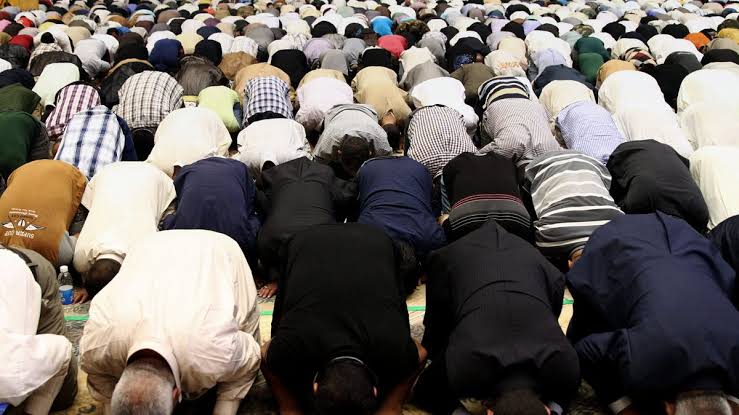
The Duʿā’ of the Prophets: Asking Ar-Rahman Series Ramadan 1447 AH Day 24 By Dr Abioye Ibraheem A
The Duʿā’ of the ProphetsThe most powerful supplications recorded in the Qur’an are the supplications of the…
The Duʿā’ of the Prophets
The most powerful supplications recorded in the Qur’an are the supplications of the prophets.
They were the people who knew Allah best.
They loved Allah immensely, and Allah loved them back.
They understood when to ask, how to ask, and what to ask for.
Their duʿā was not only words. It was an expression of complete dependence on Allah.
Allah reminds us in Sura Al-Isra (17:57) that even the most righteous servants constantly turn to Him:
أُو۟لَـٰٓئِكَ ٱلَّذِينَ يَدْعُونَ يَبْتَغُونَ إِلَىٰ رَبِّهِمُ ٱلْوَسِيلَةَ أَيُّهُمْ أَقْرَبُ وَيَرْجُونَ رَحْمَتَهُۥ وَيَخَافُونَ عَذَابَهُۥٓ ۚ إِنَّ عَذَابَ رَبِّكَ كَانَ مَحْذُورًۭا
˹Even˺ the closest ˹to Allah˺ of those invoked would be seeking a way to their Lord, hoping for His mercy, and fearing His punishment. Indeed, your Lord’s torment is fearsome.
The scholars explain that this verse was revealed in relation to polytheists who used to call upon angels, prophets, or jinn, because they believed them to be closer to Allah, and therefore a valid means of drawing nearer to Allah (wasīlah).
These prophets themselves, who are certainly closest to Allah, called upon Him constantly. Therefore, the Muslim should never feel shy about raising their hands to Ar-Raḥmān. For this, we can learn a lot from the duʿā’ of the prophets.
Sūrat al-Anbiyāʾ recounts the stories of many prophets and reminds believers that they were all servants of Allah who endured trials, remained steadfast, and called upon their Lord. The surah moves through scenes from the lives of prophets such as Ibrahim, Lut, Nuh, Dawud, Sulayman, Ayyub, Yunus, and Zakariyya, highlighting their devotion and Allah’s mercy toward them.
In one powerful passage near the end of the surah, Allah records several of their supplications. From the duʿā’ of Ayyub in hardship, to the cry of Yunus in darkness, to the plea of Zakariyya for a child in old age, the Qur’an shows how the prophets turned to Allah in every circumstance.
Let’s review this passage together.
The Duʿā’ of Ayyub: Patience in Hardship
The story of Ayyub (Job) is among the most moving of the stories of the prophets.
Ayyub had once lived a life of comfort. He had wealth, family, and good health. But Allah tested him with a long and severe trial. His wealth disappeared, his children were taken from him, and his body was struck with illness. The trial likely lasted for years.
Yet throughout this hardship, Ayyub remained patient. Instead, he turned to Allah.
When the hardship became overwhelming, he made a humble supplication:
He said:
أَنِّى مَسَّنِىَ ٱلضُّرُّ وَأَنتَ أَرْحَمُ ٱلرَّٰحِمِينَ
“I have been touched with adversity, and You are the Most Merciful of the merciful.”
— Surah Al-Anbiya 21:83
He did not make demands. He simply placed his condition before Allah and acknowledged His mercy.
And so, Allah answered him.
فَٱسْتَجَبْنَا لَهُۥ فَكَشَفْنَا مَا بِهِۦ مِن ضُرٍّۢ ۖ وَءَاتَيْنَـٰهُ أَهْلَهُۥ وَمِثْلَهُم مَّعَهُمْ رَحْمَةًۭ مِّنْ عِندِنَا وَذِكْرَىٰ لِلْعَـٰبِدِينَ
So We answered his prayer and removed his adversity, and gave him back his family, twice as many, as a mercy from Us and a lesson for the ˹devoted˺ worshippers.
— Surah Al-Anbiya 21:84
The Prophet ﷺ said:
“Nothing repels divine decree except duʿā’.”
— Jamiʿ at-Tirmidhi 2139
Duʿā’ is one of the greatest acts of worship.
Through it, the believer expresses complete dependence on Allah.
And through it, Allah changes circumstances, lifts hardships, and opens doors.
We ask Allah to not test us beyond what we can bear. We ask Allah to ease our affairs and bless us with Al-Jannah.
The Duʿā’ of Yunus: Calling Allah in Darkness
Allah also tells us the story of Yunus.
After leaving his people, Prophet Yunus was swallowed by a great fish and found himself surrounded by layers of darkness—darkness of the sea, darkness of the night, and darkness of the belly of the fish.
In that moment, he called upon Allah:
لَّآ إِلَـٰهَ إِلَّآ أَنتَ سُبْحَـٰنَكَ إِنِّى كُنتُ مِنَ ٱلظَّـٰلِمِينَ
“There is no god except You. Glory be to You. Indeed, I was among the wrongdoers.”
— Surah Al-Anbiya 21:87
So, Allah responded:
فَٱسْتَجَبْنَا لَهُۥ وَنَجَّيْنَـٰهُ مِنَ ٱلْغَمِّ ۚ وَكَذَٰلِكَ نُـۨجِى ٱلْمُؤْمِنِينَ
“So We responded to him and saved him from distress. And thus do We save the believers.”
— Surah Al-Anbiya 21:88
Yunus acknowledged his wrong and turned to Allah in complete dependence. So Allah saved him from his distress.
The verse does not limit the promise to Yunus. It extends the promise to us, Muslims.
Just as Allah rescued Yunus from darkness, He rescues those who turn to Him sincerely.
In Surah As-Saffat, Allah says further that Yunus was saved because he was “among those who glorified Allah.” Otherwise, he would have remained in the belly of the fish until the Day of Resurrection (Qur’an 37:143–144).
Whoever remembers Allah in ease, Allah remembers him in hardship.
The Duʿā’ of Zakariyya: Asking When Hope Seems Gone
The Prophet Zakariyya’s confronts biological expectations. He reached old age without children. His hair had turned white. His bones had weakened.
His wife, probably also elderly, was barren.
Yet he still turned to Allah and asked.
He said:
رَبِّ لَا تَذَرْنِى فَرْدًۭا وَأَنتَ خَيْرُ ٱلْوَٰرِثِينَ
“My Lord, do not leave me childless, though You are the best of inheritors.”
— Qur’an 21:89
Allah answered him with a son—Yahya.
فَٱسْتَجَبْنَا لَهُۥ وَوَهَبْنَا لَهُۥ يَحْيَىٰ وَأَصْلَحْنَا لَهُۥ زَوْجَهُۥٓ ۚ إِنَّهُمْ كَانُوا۟ يُسَـٰرِعُونَ فِى ٱلْخَيْرَٰتِ وَيَدْعُونَنَا رَغَبًۭا وَرَهَبًۭا ۖ وَكَانُوا۟ لَنَا خَـٰشِعِينَ
“So We answered his prayer, granted him Yahya, and made his wife fertile. Indeed, they used to race in doing good, and call upon Us with hope and fear, totally humbling themselves before Us.”
Allah answered him with a son. Not just with a son. But Allah answered him with a family that raced each other in doing good deeds. A praying family. That looked up to Allah with hope and fear. A family that did not despair of Ar-Rahman.
Zakariyya’s story reminds us that duʿā’ is never limited by what seems possible.
When we ask Allah, we are asking the One for whom nothing is impossible.
The Duʿā’ of Musa: Expanding the Heart
When Allah commanded Musa to confront Pharaoh, he felt the immense weight of the task. Prophet Musa likely had a speech impediment that made speech difficult for him. Now, he was being commanded to confront the Pharaoh.
Although we do not know which Pharaoh is referred to in Prophet Musa’s story, we know that the Pharaohs were considered living embodiments of the sky god. Surah An-Nazi’at quotes Pharaoh declaring, “I am your lord, the most high”. What grandiosity! And it was matched by immense power in this world. The Pharaohs were militarily and politically powerful, conquering land after land, achieving massive architectural feats.
Being in their presence must have felt very overwhelming. Now, add a speech impediment to it!
What did Musa do? He turned to Allah and said:
قَالَ رَبِّ ٱشْرَحْ لِى صَدْرِى ٢٥
وَيَسِّرْ لِىٓ أَمْرِى ٢٦
وَٱحْلُلْ عُقْدَةًۭ مِّن لِّسَانِى ٢٧
يَفْقَهُوا۟ قَوْلِى ٢٨
“My Lord, expand for me my chest, ease my task for me, and untie the knot from my tongue so they may understand my speech.”
— Surah Taha 20:25–28
Before facing the greatest tyrant of his time, Musa asked for inner strength, clarity, and ease.
He also did something else. He brought along someone who did not have a speech impediment. His brother, Harun.
He prayed. And then he came up with a plan to help him actualize his vision. He asked Allah’s blessing on that plan.
The prophets teach us that duʿā’ should include the things that help us fulfill our responsibilities.
Side point: Even though Mūsā worried about his speech, Allah still chose him to confront Pharaoh and deliver revelation.
This is a reminder that strength comes from Allah, not personal perfection.
The Duʿā’ of Ibrahim: Concern for Future Generations
The prophets did not only ask for themselves.
They asked for their families and their communities.
Prophet Ibrahim prayed:
رَبِّ ٱجْعَلْ هَـٰذَا ٱلْبَلَدَ ءَامِنًۭا وَٱجْنُبْنِى وَبَنِىَّ أَن نَّعْبُدَ ٱلْأَصْنَامَ
“My Lord! Make this city ˹of Mecca˺ secure, and keep me and my children away from worshiping idols.”
— Surah Ibrahim 14:35
And he prayed:
رَبِّ ٱجْعَلْنِى مُقِيمَ ٱلصَّلَوٰةِ وَمِن ذُرِّيَّتِى ۚ رَبَّنَا وَتَقَبَّلْ دُعَآءِ
“My Lord, make me an establisher of prayer, and from my descendants. Our Lord! Accept my prayers.”
— Surah Ibrahim 14:40
Prophet Ibrahim was very concerned about his progeny not falling into polytheism. So, he prayed against it. From his sons Ismaʿil and Isḥāq, Allah raised generations of prophets. Ya’qub from Ishaq. Yusuf from Ya’qub. Musa, Dawud, and Sulayman, all also descendants of Ya’qub.
Long chain in between them, but our Beloved, Prophet Muhammad ﷺ, came from Isma’il.
What a way for duʿā’ to be answered!
Prophet Ibrahim’s duʿā’ reminds us that believers should constantly ask Allah for protection over their faith and the faith of their families, and this is a duʿā’ we should adopt.
رَبِّ ٱجْعَلْنِى مُقِيمَ ٱلصَّلَوٰةِ وَمِن ذُرِّيَّتِى ۚ رَبَّنَا وَتَقَبَّلْ دُعَآءِ
Rabbi ijʿalnī muqīma aṣ-ṣalāti wa min dhurriyyatī, rabbanā wa taqabbal duʿāʾ.
“My Lord, make me an establisher of prayer, and from my descendants. Our Lord! Accept my prayers.”
Learning From the Prophets
When we study the supplications of the prophets, certain patterns appear.
They began with humility. They acknowledged their weakness.
They praised Allah before asking.
They asked for both worldly needs and eternal guidance.
They never despaired of Ar-Rahman!
The door to Ar-Raḥmān is always open.
So call upon Him.
As the prophets called upon Him.
And trust that the One who answered them still answers those who turn to Him today.