Istighfār: Returning to the Door That Never Closes18 Ramadan, 1447AH: Asking Ar-Rahman Series By Ibraheem Habeebah Adedoyinsola
All praise belongs to Allāh, Ar-Raḥmān, the Most Merciful, whose mercy is greater than our sins and whose…
All praise belongs to Allāh, Ar-Raḥmān, the Most Merciful, whose mercy is greater than our sins and whose forgiveness is wider than our failures. May peace and blessings be upon the Messenger of Allāh ﷺ.
As Ramadan moves forward, a quiet reality settles in the heart.
We begin to reflect on the days that have passed.
Moments we could have done more.
Prayers we rushed.
Nights we intended to wake for but slept through.
And sometimes a whisper reaches the heart:
“You have fallen short.”
But Ramadan is not a month of closed doors.
It is a month where the doors of mercy are thrown open, inviting every servant back to their Lord.
Among the greatest of these doors is Istighfār.
The act of returning.
The act of admitting our need.
The act of saying sincerely:
Astaghfirullāh.
The Door That Never Closes
Many people assume forgiveness belongs only to those who rarely fall.
Yet the Qur’an speaks directly to those who have stumbled.
Allāh says:
“Say: O My servants who have transgressed against themselves, do not despair of the mercy of Allāh. Indeed, Allāh forgives all sins. He is the Most Forgiving, the Most Merciful.”
(Qur’an 39:53)
Reflect on how the verse begins:
“O My servants.”
Even after sin.
Even after mistakes.
Even after repeated failures.
Allāh still addresses them as His servants.
And He commands them not to lose hope, because the mercy of Ar-Raḥmān is vast and never exhausted.
Allāh also says:
“And whoever does wrong or wrongs himself but then seeks forgiveness of Allāh will find Allāh Forgiving and Merciful.”
(Qur’an 4:110)
The promise is clear:
Whoever returns to Allāh will find Him ready to forgive.
Istighfār Brings Relief and Opens Doors
Seeking forgiveness does more than erase sins. It brings relief to the heart and blessings into a person’s life.
Allāh tells us about the message of Prophet Nūḥ (ʿalayhi as-salām) to his people:
“Seek forgiveness from your Lord. Indeed, He is Ever Forgiving.
He will send rain upon you in abundance,
increase you in wealth and children,
and provide for you gardens and rivers.”
(Qur’an 71:10–12)
SubḥānAllāh.
Istighfār opens doors.
Doors of provision.
Doors of ease.
Doors of blessings we may not even realize were withheld.
The Messenger of Allāh ﷺ said:
“Whoever constantly seeks forgiveness, Allāh will make for him a way out of every distress and provide for him from where he does not expect.”
(Reported by Abū Dāwūd)
Because of this, the believer turns to istighfār in every state.
During ease and during hardship.
During moments of weakness.
And especially when difficulties arise in worldly or spiritual matters.
When life feels heavy…
when the heart feels distant…
when problems seem overwhelming…
Increasing in istighfār is one of the most powerful responses.
Many scholars advised that when a believer experiences hardship, they should increase in seeking forgiveness. Through it, Allāh opens doors of relief that were previously unseen.
Asking for Complete Forgiveness and Renewal
When we seek forgiveness, we are also asking Allāh to renew us.
We ask Him to cleanse our hearts, erase the traces of our mistakes, and restore our connection with Him.
Every sincere Astaghfirullāh carries within it the hope of a new beginning.
How many times has Allāh allowed us to start again?
How many sins has He concealed when He could have exposed them?
How many times has He forgiven us long before we fully grasped how much we needed His mercy?
Allāh is Al-Ghafūr, the Most Forgiving.
And He is At-Tawwāb, the One who continually welcomes the servant who returns.
He says:
“Turn to Allāh in repentance, all of you, O believers, that you might succeed.”
(Qur’an 24:31)
Every step toward repentance is a step back toward Allāh.
When the Heart Turns Back
There are moments when the heart feels weighed down.
Peace feels distant.
Something inside feels unsettled.
Often, the cure begins with remembrance and repentance.
When the tongue repeats Astaghfirullāh, the heart slowly softens.
The burden begins to lift.
Because each moment of seeking forgiveness draws a servant closer to Ar-Raḥmān.
And Allāh tells us:
“Indeed, Allāh loves those who constantly repent and loves those who purify themselves.”
(Qur’an 2:222)
Not only does He forgive.
He loves those who return to Him.
The Duʿā’ of the Last Ten Nights
As we approach the last ten nights of Ramadan, the importance of seeking forgiveness becomes even greater.
These nights hold immense mercy.
Within them lies Laylatul Qadr, a night better than a thousand months.
ʿĀ’ishah (raḍiyAllāhu ʿanhā) asked the Prophet ﷺ:
“O Messenger of Allāh, if I know which night is Laylatul Qadr, what should I say in it?”
He ﷺ replied:
“Say: Allāhumma innaka ʿafuwwun tuḥibbul ʿafwa faʿfu ʿannī.”
“O Allāh, You are Most Forgiving and You love to forgive, so forgive me.”
(Reported by al-Tirmidhī)
Reflect on this carefully.
From all the supplications she could make, the Prophet ﷺ taught her to ask for forgiveness.
Because the greatest success on Laylatul Qadr is not simply witnessing the night.
The greatest success is leaving that night forgiven.
And the name used in this duʿā’ is profound:
Al-ʿAfūw — the One who erases sins completely, removing them as though they never existed.
So during these nights, repeat this duʿā’ often.
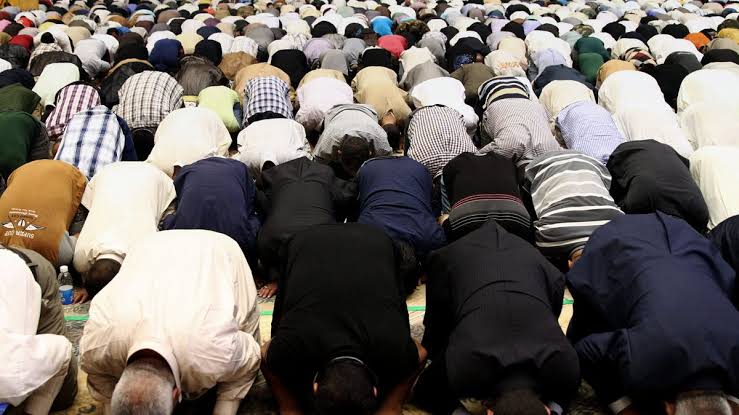
In sujūd.
In the quiet of the night.
Between your prayers.
Perhaps a single sincere moment of saying:
Allāhumma innaka ʿafuwwun tuḥibbul ʿafwa faʿfu ʿannī
may be the moment Allāh erases a lifetime of sins.
Sayyidul Istighfār
The Prophet ﷺ also taught what is known as Sayyidul Istighfār, the master supplication for seeking forgiveness.
He said:
“Whoever says it during the day with firm faith and dies that day will be among the people of Paradise; and whoever says it at night with firm faith and dies before morning will be among the people of Paradise.”
(Ṣaḥīḥ al-Bukhārī)
Arabic
اللَّهُمَّ أَنْتَ رَبِّي لَا إِلَٰهَ إِلَّا أَنْتَ، خَلَقْتَنِي وَأَنَا عَبْدُكَ، وَأَنَا عَلَىٰ عَهْدِكَ وَوَعْدِكَ مَا اسْتَطَعْتُ، أَعُوذُ بِكَ مِنْ شَرِّ مَا صَنَعْتُ، أَبُوءُ لَكَ بِنِعْمَتِكَ عَلَيَّ، وَأَبُوءُ بِذَنْبِي، فَاغْفِرْ لِي فَإِنَّهُ لَا يَغْفِرُ الذُّنُوبَ إِلَّا أَنْتَ
Transliteration
Allāhumma anta rabbī, lā ilāha illā anta. Khalaqtanī wa anā ʿabduka, wa anā ʿalā ʿahdika wa waʿdika mastataʿtu. Aʿūdhu bika min sharri mā ṣanaʿtu. Abū’u laka biniʿmatika ʿalayya, wa abū’u bidhambī. Faghfir lī fa innahu lā yaghfirudh-dhunūba illā anta.
These words carry humility, gratitude, and sincere repentance before the Lord who knows us better than we know ourselves.
Ramadan Is the Perfect Time to Return
The nights of Ramadan overflow with mercy.
The gates of Paradise are open.
The gates of Hell are closed.
And Ar-Raḥmān invites His servants again and again:
Return.
Even if you feel distant.
Even if you feel unworthy.
Even if you have fallen many times before.
Every Astaghfirullāh is a knock on a door that never closes.
And behind that door is Ar-Raḥmān, whose mercy is greater than everything we have done.
A Duʿā’ for Forgiveness and Renewal
Yā Allāh, You are Al-Ghafūr, the Most Forgiving.
Forgive the sins we remember and the sins we have forgotten.
Forgive the sins we committed knowingly and those we committed in weakness.
Cleanse our hearts with sincere repentance.
Renew our faith and renew our closeness to You.
Allow our tongues to remain moist with istighfār.
Allow us to witness Laylatul Qadr and leave it forgiven.
And do not let us leave Ramadan except that You have forgiven us completely.
Āmīn.
Sometimes the most powerful transformation begins with a quiet whisper:
Astaghfirullāh.
And Ar-Raḥmān loves the servant who returns.
#AskingArRahman